Starts
Kathmandu
The 7-day Pikey Peak Trek is a short, accessible adventure in Lower Khumbu, offering spectacular 360-degree views of Mount Everest and Kanchenjunga—without needing a Lukla flight. Starting with a scenic drive to Dhap, this moderate trek reaches the 4,065m summit, winding through traditional Sherpa villages, ancient monasteries, and quiet rhododendron forests. Perfect for trekkers short on time, it delivers a complete Himalayan experience with rich culture and stunning vistas.
Experience a quieter side of the Everest region with a perfect mix of mountain vistas and authentic Sherpa culture:
The Short Pikey Peak Trek is the best trekking area to view the sunrise and sunset from the Pikey Peak viewpoint. This area is famous for the world’s highest peak, Mt. Everest. Pikey Peak Trek is located in the Lower Khumbu region of Nepal, in the Solukhumbu District of Nepal, with an elevation of 4065 m (13,336 ft), which makes this region popular among people around the world. It provides an opportunity to be a part of Sherpa culture and enjoy with them their dances, songs, and treats. As these are less-travelled trails, they also pass through traditional Sherpa villages and monasteries, where we can get an experience of living with Sherpas in their lifestyle.
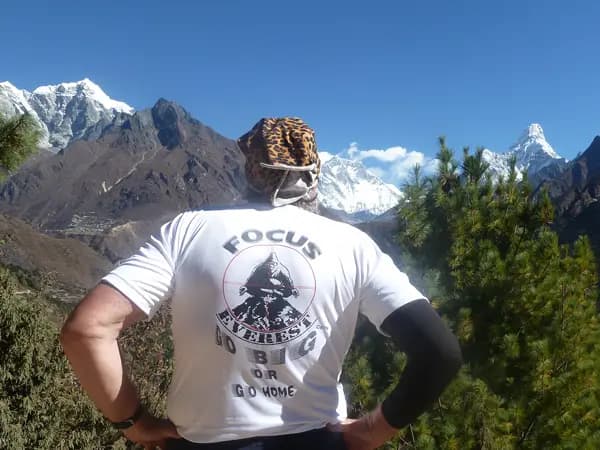
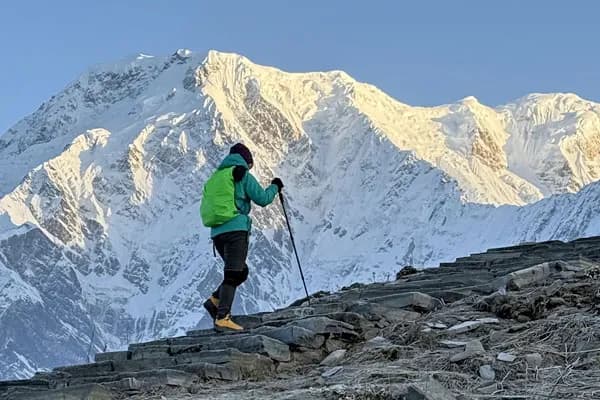
You can now experience the ultimate panoramic views of Everest without the stress of flying to Lukla. If you’ve dreamed of witnessing iconic Himalayan giants—including Everest, Lhotse, Makalu, Kanchenjunga, Annapurna, and Numbur—the Pikey Peak Trek is an extraordinary route that brings these majestic peaks right before your eyes. Early morning delivers the most spectacular vistas as the first light reflects off the gleaming snowcapped summits. Best of all, because you travel overland by private drive from Kathmandu to Dhap, you'll never have to worry about mountain flight delays or cancellations.
Embarking on a guided Pikey Peak Trek with Rugged Trails Nepal means immersing yourself in both awe-inspiring Himalayan landscapes and authentic Sherpa culture. Your journey begins in Kathmandu with a scenic 7-to-8-hour drive to Dhap (2,900m). From there, you'll set off on foot toward the peaceful ridge village of Jhapre before ascending to Pikey Base Camp (3,640m).
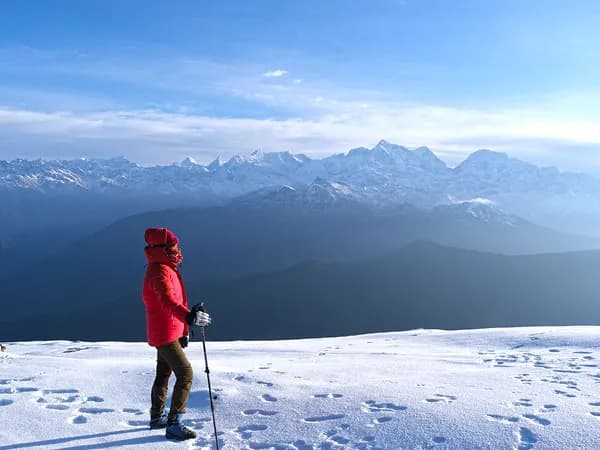
The absolute highlight awaits at the summit of Pikey Peak (4,065 m), where a sweeping 360 panorama of Everest, Dhaulagiri, and Kanchenjunga will leave you breathless. After taking in the views, continue along scenic ridgelines to Jase Bhanjyang before descending into Junbesi (2,700 m)—a culturally rich Sherpa village. Finally, visit the historic monasteries surrounding Salleri and Phaplu before enjoying a smooth drive back to Kathmandu.
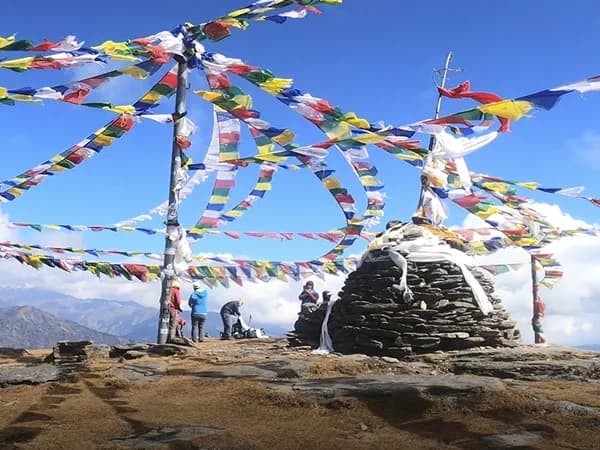
Whether you choose an express 4-6 day route or a relaxed week-long itinerary, Pikey Peak offers an unforgettable journey. Along quiet, uncrowded trails, you'll experience authentic Sherpa hospitality and deepen your appreciation for Tibetan Buddhism as you pass ancient monasteries, gompas, stupas, and carved mani walls.
The maximum elevation reached on this journey is 4,065 meters (13,336 feet) at Pikey Peak summit. While manageable compared to high-pass routes, it still offers a rewarding mountain challenge with a low risk of altitude sickness due to the gradual overland profile. If you are looking for an off-the-beaten-path Himalayan adventure, Pikey Peak delivers stunning scenery, rich culture, and unforgettable memories.
We will travel from Kathmandu to Dhap Bazar on the first stage of our adventure by road. The Sunkoshi River is on your left as you travel down the road until you arrive at Ghurmi Village. We will stop along the trip to take in the ever-changing Nepalese environment, which features thick forests, terraced rice fields, and several rushing rivers. When you finally get to Dhap Bazaar, we can take a leisurely stroll through the markets there.
The hike starts from Dhap. We will see the peaks of the Numbur Himal range as we move closer to Sigane. For the first few hours, the Sigane path follows a road that is being constructed. Your first village is one called Japre (2920 m). It overlooks a large valley and offers stunning views of the Numbur and Everest mountains. There is a charming tiny stupa and monastery. We make a stop in Japre for the night.
We will continue along the path after Japre as it ascends to a grassy ridge at Bhulbhule. We will also enjoy lovely views of the Everest range from there. The path splits shortly after Bhulbhule, and you'll turn right to Pikey Peak. We will go by some historic yak homes and a substantial mani stone wall. The trail then winds through a lovely woodland track as it follows the contour of the hillside below Taklung Danda. Along a flat route, rhododendron trees can be found in abundance here (which we can see in bloom in the spring). It takes around two hours from the time we leave the forest to get to Pikey Peak base camp.
We will begin our trek to Pikey Peak's well-known viewpoint this morning. Aside from Mt. Everest (8848m), Mt. Number Chuli (6959m), Mount. Thamserku (6608m), Mt. Kangtega (6685m), Mt. Khatang (6853m), Mt. Kanchenjunga (8586m), Mt. Manaslu (8163m), Mt. Dhaulagiri (8167m), Mt. Gaurishankar (7134m), Mt. We will descend to Jase Bhnajyang and rest there after viewing the expansive view from Pikey Peak to spend the night at Jase Bhanjyang.
We continue on the wooded walk after breakfast. we will pass through the meadow after the woodland. Then we get to the Taktor settlement, where will have lunch. Then proceed on the wide gravel road in the direction of Junbesi. We're going to a Buddhist Monastery first, then Junbesi. Beautiful tea establishments, a Buddhist stupa, and other amenities can be found at Junbesi. Tamang, Magar, and Sherpa people live in this village.
After breakfast, we'll continue on the Junbesi Khola's descending dusty trail till we come to a steel suspension bridge. We shall arrive at Beni Ghat once we have crossed the bridge. Before arriving in Phaplu, we continue our trek along the route that is full of picturesque delights. At Phaplu, we can partake in a customary Sherpa cultural event while sampling the local food and drink.
Believe us, the trip from Phaplu to Kathmandu will be exhausting. Transfer to the hotel in Kathmandu upon arrival, if you have made reservations; otherwise, we will make reservations for you. We'll have a farewell meal in a fine restaurant if time allows.
Packing correctly for the Short Pikey Peak Trek ensures safety, warmth, and comfort across changing altitudes. Because temperatures shift rapidly between lower valleys and high ridges, sticking to a layered clothing system is essential.