Ask ten travelers when to visit the Himalayas, and nine will automatically tell you "October or April." While Autumn and Spring certainly earn their reputation for classic blue-sky panoramas, treating Nepal as a rigid two-season destination misses both the richness of its local seasonal calendar and the reality of how Himalayan weather is evolving.
Across Nepal, shifting climate patterns mean the old calendar boundaries are blurring—late rains sometimes stretch into early autumn, and rare autumn snowstorms occasionally turn normally bare, rocky ridges into brilliant white landscapes. At the same time, lower-elevation routes like Pikey Peak offer flight-free panoramic views without high-altitude crowds, while summer monsoons reveal vibrant green pastures and sacred festivals that dry-season trekkers never see. Here is a practical, ground-level guide to choosing the right month and preparing for real mountain conditions across Nepal.
Choose Your Season by Purpose of Travel
Before looking at temperature charts, match your trip timing to what you actually want out of the mountains:
-
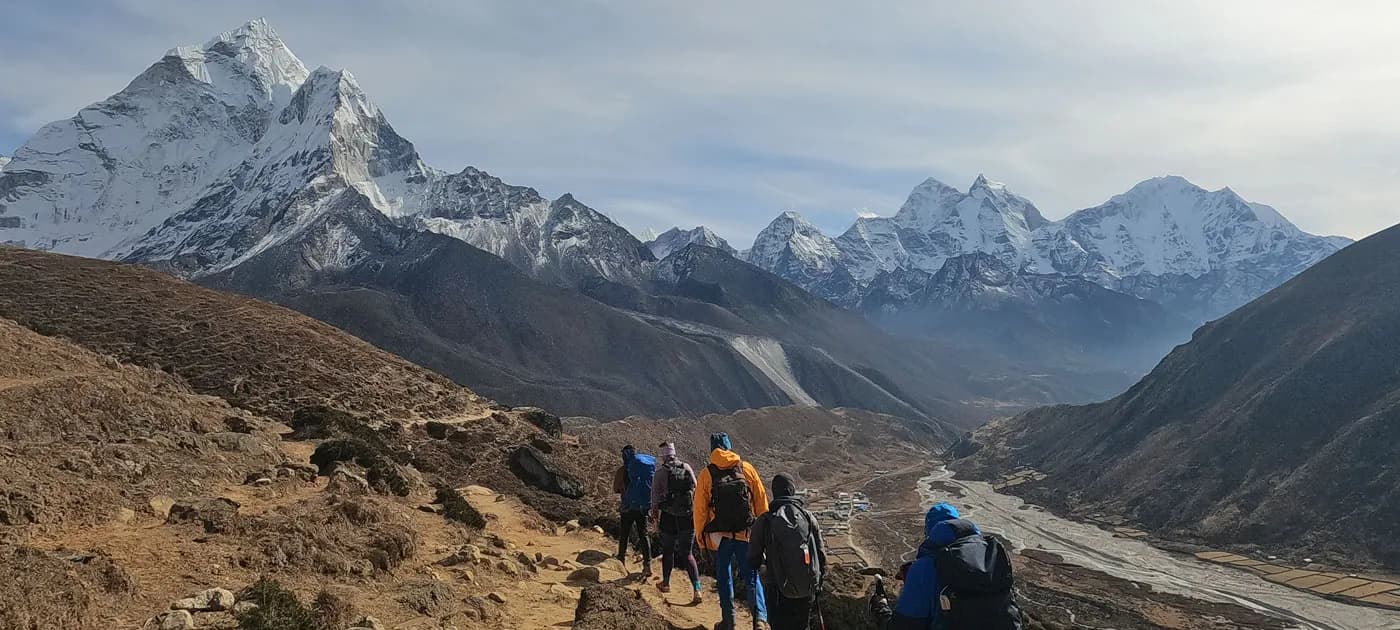
First-Time Classic Panoramas & Open High Passes: Target October–November or March–April for Everest Base Camp, Annapurna Base Camp, Langtang, Annapurna Circuit, and the Manaslu Circuit. Teahouses are fully staffed, trails are well-established, and morning visibility is reliable.
-
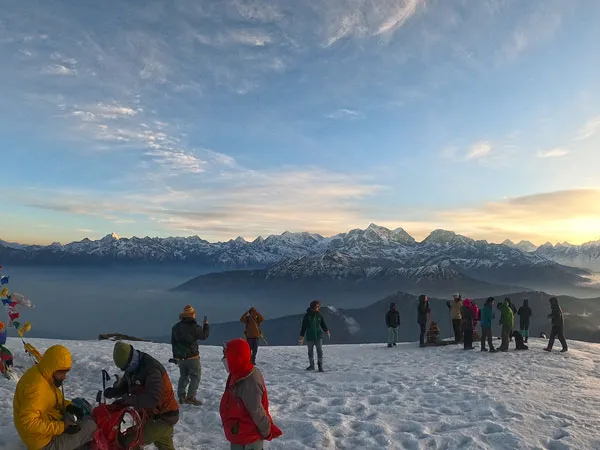
Flight-Free Panoramic Views, Quiet Trails & Under 4,500 m: Target Spring (March–May), Autumn (October–November), or early Winter (December) on the Pikey Peak Trek (4,065 m)—an ideal alternative route reached by road from Kathmandu with lush rhododendron forests and uninterrupted 8,000-meter mountain views.
-
Viral Emerald Meadows, Wildflowers & Sacred Festivals: Target July–August for short, culturally rich monsoon routes like Ruby Valley, Badimalika, and Kori Danda, when high pastures burst with wild orchids and come alive with Janai Purnima pilgrimages and seasonal herder (goth) camps.
-
Lush Foothills & Rain-Shadow Landscapes: Target June–August in the Annapurna foothills (such as Poon Hill, Ghandruk, or Mardi Himal) or June–August in rain-shadow regions like Upper Mustang and Upper Dolpo if you prefer fewer crowds and dramatic green or desert-canyon landscapes.
Nepal’s 4 Trekking Seasons (and Traditional 6 Ritus) Explained
While international travelers organize the year into four main trekking seasons, Nepal’s traditional lunar-solar calendar actually recognizes six distinct ecological seasons (Ritus): Basanta (Spring, mid-March–mid-May), Grishma (Early Summer, mid-May–mid-July), Barsha (Monsoon, mid-July–mid-September), Sharad (Autumn, mid-September–mid-November), Hemanta (Pre-Winter, mid-November–mid-January), and Shishir (Winter, mid-January–mid-March). Understanding how those six local shifts blend into the four major trekking windows makes planning far clearer.
Autumn (Sharad / Late September–November): The Gold Standard
Autumn remains Nepal’s premier trekking window. Once summer rains clear out dust and haze, the atmosphere turns crisp, offering sweeping mountain views and comfortable daytime walking temperatures.
-
Best Regions: Everest (EBC, Gokyo, Three Passes), Annapurna Circuit, Annapurna Base Camp, Manaslu Circuit, Langtang, and Pikey Peak.
-
Cultural Highlights: Nepal’s biggest festivals—Dashain and Tihar—bring marigolds, bamboo swings, and festive village hospitality across the hills.
-
Ground Reality: October is the busiest month of the year. Flights into Lukla divert through Manthali Airport (Ramechhap) (see our Nepal Trekking Transit Guide for transfer timing), and popular teahouses fill up early.
Spring (Basanta / March – May): Rhododendrons & Expedition Energy
As winter snow recedes, warmer air sweeps up the valleys and turns mid-elevation forests (2,000 m–3,500 m) into a blaze of red, pink, and white rhododendron blossoms—especially in April.
-
Best Regions: Ghorepani Poon Hill, Annapurna Base Camp (compare monthly specifics in our Best Time for Annapurna Base Camp Trek Guide), Pikey Peak, Mardi Himal, Langtang Valley, and Everest Base Camp (where Everest climbing expeditions gather at Base Camp).
-
Cultural Highlights: Holi (Festival of Colors in March), Nepali New Year (mid-April), and Buddha Jayanti (May).
-
Ground Reality: March starts cool and crisp; by mid-to-late May (Grishma), lower valleys grow hot and afternoon clouds or pre-monsoon showers often roll in after lunch.
Winter (Hemanta & Shishir / December – February): Solitude & Crisp Skies
Winter brings cold nights and snow above 3,500m–4,000m, yet daytime skies across the foothills are remarkably clear and crowd-free.
-
Best Regions: Lower Annapurna routes (Poon Hill, Ghandruk, Australian Camp), Pikey Peak, Helambu, and lower Khumbu (Namche/Tengboche). (Note: High trails like Mardi Himal High Camp can close temporarily after heavy mid-winter snow, making lower ridges more reliable).
-
Cultural Highlights: Tamu Lhosar (Gurung New Year in late December), Maghe Sankranti (mid-January), and Sonam Lhosar.
-
Ground Reality: High passes like Thorong La (5,416m), Cho La, and Larkya La can close temporarily after heavy snowfall, and teahouses above 4,000m operate with limited heating. Warm-down layers and flexible buffer days are essential.
Monsoon (Grishma & Barsha / June–August): Rain Shadows, Foothills & Viral Meadow Treks
Many older travel guides treat June through August as completely off-limits. In reality, while heavy afternoon rain, high humidity, and leeches below 2,800 m require realistic preparation, monsoons open up three very different ways to experience Nepal:
Rain-Shadow Expeditions (Upper Mustang & Dolpo)
Because Upper Mustang and Dolpo sit north of the main Annapurna and Dhaulagiri ranges, the mountains block most monsoon clouds. You get dramatic red-cliff canyons, ancient walled monasteries, and open trails while the southern foothills are wet. (Note: Both regions require advance Restricted Area Permits—check our Nepal Trekking Permits & Restricted Area Rules Guide for current rules).
Short and mid-elevation routes around the Annapurna foothills—including Ghorepani Poon Hill, Ghandruk, Australian Camp, and Mardi Himal—remain open and trek-able throughout the monsoon. Teahouses stay open with welcoming hosts, waterfalls run at full power, and terraced hillsides glow bright green. While small trail slips and rockfalls do occur during heavy rain, they rarely stay blocked for long: local teahouse owners, village youth clubs, conservation committees, and local municipalities actively step in to clear debris, rebuild stone steps, and restore footbridges quickly, because these trails are the lifelines connecting mountain villages.
Viral Monsoon Meadow & Festival Treks: Ruby Valley, Badimalika & Kori Danda
If you have scrolled through Himalayan travel reels or personal trek blogs recently, you have likely seen vibrant green ridges, wildflowers, cloud inversions, and lively mountain pilgrimages—all filmed in July and August, the only window when these high pastures turn emerald green rather than dry brown or snow-covered.
Ruby Valley (Ganesh Himal) spans Dhading and Rasuwa up to Pangsang La (3,850m) and typically takes 5 to 8 days using overland 4WD transport from Kathmandu rather than flights. In late July and August, cascading waterfalls like Ganga Jamuna, lush terraced hills, and mist-draped peaks draw travelers—especially around Janai Purnima, when sacred pilgrimages and Tamang Jhankri (shaman) rituals take place around Parvati Kund and Ganga Jamuna. Community homestays and local lodges offer genuine village hospitality, though lower forest sections bring leeches and muddy jeep tracks.
Badimalika (Triveni Patan) lies in Bajura in Far-West Nepal, reaching roughly 4,220 m at the Badimalika Temple, and usually takes 7 to 10 days (combining a flight to Dhangadhi with overland road travel toward Martadi/Jadanga). Its draw in July through mid-August is the sweeping green grassland of Triveni Patan, rare medicinal herbs, seasonal wildflowers, and the Badimalika Mela around Janai Purnima, where pilgrims, priests, and traditional Deuda singers gather at a high-altitude Shakti Peeth. Because facilities are basic shelters or camping with long road approaches, it suits trekkers looking for raw wilderness and living cultural tradition.
Kori Danda (Sikles–Kapuche) in the Annapurna Conservation Area (Kaski) reaches around 3,800 m on Kori Ridge and works well as a 4- to 6-day trek starting with roughly a 3-hour jeep ride from Pokhara to Sikles. From late June to early September, the ridge and surrounding pastures burst with monsoon wildflowers and orchids, paired with sea-of-clouds inversions below Annapurna II and Lamjung Himal, connected to Kapuche Glacier Lake, and showcasing seasonal Gurung pastoral (goth) life as herders graze livestock on high meadows. Shelters near Kori Ridge are basic, and the forest climb from lower villages has steep stone steps that get slick in rain, so good trekking poles and rain gear are essential.
Even in peak July and August, valley clouds typically lift between 5:30 AM and 8:30 AM for crisp early-morning views before mist builds back up around midday. Adding 1 buffer day for monsoon road delays and packing gaiters for forest sections below 2,800m keeps the trip stress-free.
Trending Alternative Under 4,500m: Why Pikey Peak Works Across Seasons
If you want dramatic 8,000-meter mountain views without battling peak-season crowds, high-altitude sickness risks above 5,000m, or Lukla flight cancellations, the Pikey Peak Trek (4,065m) in lower Solukhumbu has quickly become one of Nepal’s standout alternative routes.
-
Zero Domestic Flights Needed: Instead of flying into Lukla—where peak-season weather or Ramechhap diversions can disrupt tight schedules—you reach the trailhead via a scenic overland drive from Kathmandu to Dhap.
-
Quiet Trails & Rhododendron Forests: Winding through peaceful Sherpa villages like Jhapre and Junbesi and dense hillside rhododendron woodlands (which burst into color throughout spring), Pikey Peak stays calm even during busy October and April weeks.
-
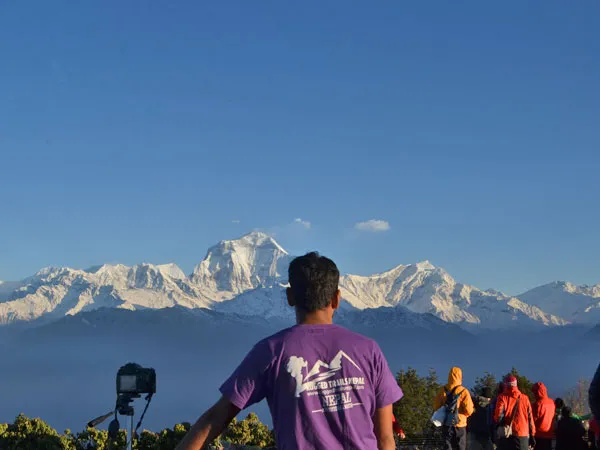
360° Himalayan Panorama Under 4,500m: Once famously called his favorite Everest viewpoint by Sir Edmund Hillary, Pikey Peak’s open summit ridge rewards you with an uninterrupted horizon stretching from Dhaulagiri and Manaslu in the west across Everest, Lhotse, and Makalu all the way to Kanchenjunga in the east—while keeping sleeping elevations comfortable and beginner-friendly.
-
Flexible 5 to 7-Day Window: Because it sits below 4,500m and connects directly by road, it works beautifully in Spring (March–May), Autumn (September–November), and crisp Winter (December–February). (Explore route details in our Pikey Peak Trek Guide Without Lukla Flights or view our Short Pikey Peak Trek Itinerary).
Global Warming, Shifting Seasons & Unseasonal Autumn Snowfall
Anyone who has spent time in the Himalayas over the past few years can see that climate change is actively shifting Nepal’s traditional weather calendar. Fixed rules like "the monsoon always ends on September 15" or "October never sees heavy snow" no longer hold true every single year.
-
More Unpredictable Transitions: Warmer atmospheric temperatures in the Himalayas have contributed to heavier, more concentrated bursts of late-monsoon rainfall and sudden weather systems arriving outside their historical months.
-
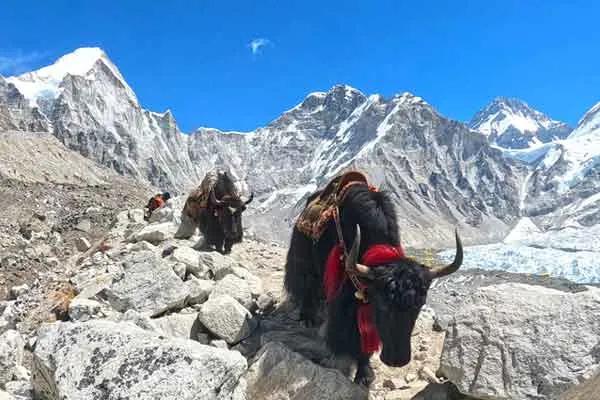
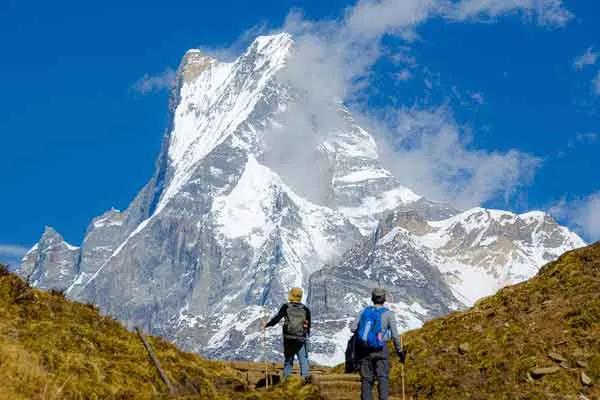
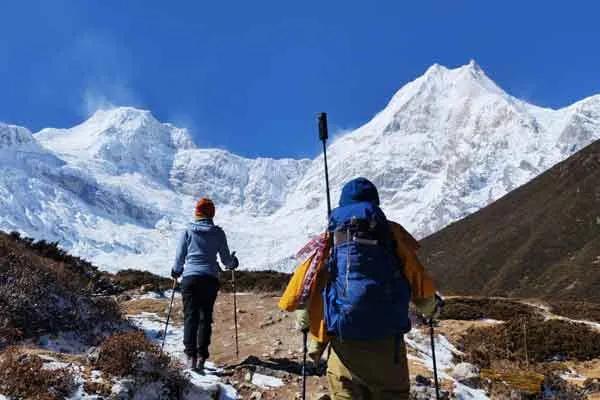
The Rare Autumn Snowfall Phenomenon: Heavy snowfall during the peak autumn trekking season used to be uncommon. Yet recent seasons have brought unexpected autumn rain-and-snow systems across major trekking routes—including the Khumbu, Annapurna, and Manaslu regions. While sudden snow on high passes requires caution, microspikes, and experienced local guidance, there was a remarkable silver lining for trekkers on the trail: surrounding peaks that normally look like bare, dark rocky hills in autumn were draped in a fresh blanket of snow, creating once-in-a-lifetime photography conditions once the skies cleared.
-
What This Means for Your Packing List: Even if you book a peak October or April trek expecting mild, dry weather, always pack a reliable waterproof shell, warm insulated layers, and traction/microspikes if your route crosses above 4,000m.
Flash Floods, Landslides & How the World Sees Nepal
Alongside shifting seasons, severe monsoon flash floods and highway landslides in specific river valleys have understandably raised questions among international travelers. As we examine in detail in our post on Whether Nepal Is Safe to Visit After Floods, there is often a wide gap between how global headlines portray Nepal and what actually happens on the trails:
-
One River Basin Is Not the Entire Country: International news coverage and broad travel advisories often summarize an entire country under a single dramatic headline when flooding hits one river corridor or highway section. Nepal’s trekking regions span separate mountain ranges and drainage systems across hundreds of kilometers—so a flood or washout in one valley does not mean Everest, Annapurna, or every other region is closed.
-
Access Roads vs. Mountain Trails: When severe rain causes disruptions, the bottleneck is usually river-valley highways, trailhead jeep roads, or temporary river crossings rather than the high mountain ridges themselves. While major highway washouts take government crews longer to rebuild, routine trail landslides in populated trekking corridors are cleared rapidly by local teahouse operators, villagers, and rural municipalities working together.
For travelers, the most reliable approach after heavy weather is corridor-specific verification rather than relying on generalized social media panic or outdated itineraries. Confirming the exact status of your trailhead road, bridges, and lodges a few days before departure—and keeping a flexible buffer day—allows you to trek safely while supporting local mountain communities that depend on seasonal visitors.
Month-by-Month Nepal Trekking Calendar
| Month |
Weather & Visibility |
Crowd Level |
Top Recommended Treks |
Key Notes |
| January |
Coldest month; crystal-skies, snow above 3000m |
Low |
Poon Hill, Mardi, Helambu, Pikey |
Sub-zero nights high up; high passes often snowbound. |
| February |
Cold early, warming late; warming late; crisp views |
Low-Moderate |
Ghorepani, Pikey Peak, Langtang, Mardi Himal |
Great transition month before spring crowds. |
| March |
Cool, dry, stable; early rhododendrons |
Moderate-High |
EBC, Pikey, ACT, Langtang, Manaslu |
Holi festival; Ramechhap Lukla |
| April |
Mild Temps, peak rhododendron blooms. |
High |
ABC, EBC, ACT, Manaslu, Khopra Ghorepani |
Best all-around Spring month, Nepali New Year. |
| May |
Warm Days, early month clarity shifting to late-month coulds. |
Moderate |
Everest High Passes, ACT, Manaslu |
Everst summit pushl warmer lower valleys. |
| June |
Monsoon arrives, humid valleys, luch green hills |
low |
Mustang, Muktinath, Mardi, Kori, Poon Hill |
Rain-shadows regions shine. |
| July |
Peak Monsoon Rain in foothills |
Low |
Kori Danda, Ruby Valley, Badimalika, Gosaikunda, Mustang, Dhorpatan |
Wildflowers peak; local communities keep main trails clear. |
| August |
Monsoon Shwoers |
Low (Busy at shrines) |
Badimalika, Ruby Valley, Gosaikunda lakeDolpo, Upper Mustang |
Janai Purnima Festival at Badimalika, Gosaikunda Lake |
| September |
Rain tapers off mid month, waterfalls full, greenery hills |
Moderate |
Annapurna, Pikey Peak, Everest, Langtang (late sept best) |
Late September offers quiet trails before oct rush. |
| October |
Driest, Clear Skies, Autumn vibes |
Peak |
EBC, 3 Passes, ACT, ABC, Langtang, Pikey Peak, Manaslu Circuit, Tsum Valley |
Dashain, Tihar Festivals; festive vibes |
| November |
Crist, dry, razor-sharp views; night turn cold |
High {early} Moderate {late} |
EBC, 3 Passes, ACT, ABC, Langtang, Ghorepani, Pikey Peak, Manaslu Circuit, Tsum Valley |
Fewer crowds after mid Nov, warm jackets needed. |
| December |
Cold, dry, sunny days; snow begins on high passes |
Low |
Poon Hill, Pikey Peak, Langtang, lower region |
Tamu Lhosar; peaceful teahouses and clear panoramas. |
Final Thoughts on Timing Your Himalayan Trek
Every month in Nepal rewards a different kind of traveler—whether you are chasing razor-sharp October views from Kala Patthar, April rhododendrons and flight-free panoramas on Pikey Peak, quiet winter mornings in the foothills, or the emerald summer meadows and festivals of Ruby Valley, Badimalika, and Kori Danda. Because modern Himalayan weather brings occasional surprises across every season, the best itinerary is always one built with realistic gear, an adaptable mindset, and 1 to 2 buffer days.
If you are planning your dates and want to cross-check logistics, pair this seasonal guide with our Nepal Trekking Permits & Restricted Area Rules Guide and our Kathmandu, Lukla & Pokhara Transit Guide—and if you ever need real-time ground updates on road, bridge, or trail conditions for a specific route, feel free to reach out to our local Kathmandu team for an honest status check.