Can You Skip Sleeping at Gorakshep? Yes. While standard Everest Base Camp itineraries include one night at Gorakshep (5,164 m), its handful of basic lodges are unheated, freezing at night, and so crowded during peak October and April weeks that solo trekkers are sometimes asked to share twin rooms. By contrast, upgraded lodges all the way up to Lobuche (4,940 m) offer private attached bathrooms and heated beds (electric blankets)—making Lobuche the ideal high-altitude base for comfort and luxury trekkers. By staying in Lobuche and hiring a local mountain horse for a full-day loop, you can ride to Everest Base Camp (5,364m) in the morning, have lunch at Gorakshep, take in Kala Patthar in the afternoon, and return to a warm, private Lobuche room before dark.
Sleeping at Gorakshep (5,164m): What to Expect & How to Visit EBC and Kala Patthar Without Staying Overnight
For most trekkers heading to Everest Base Camp, the biggest surprise isn’t the trail—it is the final overnight stop at Gorakshep (5,164 m / 16,942 ft). Sitting on a frozen sandy lakebed beside the Khumbu Glacier, Gorakshep is the last settlement before Base Camp and Kala Patthar.
Because every standard itinerary funnels trekkers into the same small cluster of lodges, many travelers—especially those booking a comfort or luxury EBC trek—worry about sleeping above 5,000 meters, dealing with sub-zero bedrooms, or sharing tight rooms during peak season. Here is an honest look at what Gorakshep is actually like—and the practical Lobuche base + horse-ride hack that lets you enjoy warm, attached-bathroom comfort while still visiting both EBC and Kala Patthar.
What Sleeping at Gorakshep Is Really Like
Even when you book a comfort or luxury trek up the Khumbu Valley, lodge standards drop sharply at Gorakshep. Only about five basic teahouses operate on the glacial moraine, and conditions are strictly utilitarian:
-
Sleeping Above 5,000m (Thin Air & Poor Sleep): At 5,164 m, oxygen levels are roughly half of sea level. Even well-acclimatized trekkers often experience restless sleep, periodic breathing, or mild altitude headaches overnight.
-
Sub-Zero Bedrooms & Basic Toilets: Only the central dining hall has a yak-dung stove (lit in the late afternoon and evening). Bedrooms have thin plywood walls with zero heating, water bottles freeze overnight, and shared squat toilets often use buckets of icy water rather than running plumbing.
-
Peak-Season Crowds & Room Sharing: Because lodge capacity is tiny and building new structures is restricted inside Sagarmatha National Park, October and April bring intense bottlenecks. When lodges fill up, solo trekkers—and occasionally small groups—may have to share twin rooms or even sleep in dining areas if they arrive late without pre-booked beds.
The Lobuche Base + Horse-Ride Hack (Skip Gorakshep Overnight)
If you want to protect your sleep, stay below 5,000m, and keep your comfort level intact—while still standing at Everest Base Camp (5,364m) and Kala Patthar (5,545m)—base yourself one stop lower in Lobuche (4,940m) for two nights and use a local mountain horse for your big push day.
Why Lobuche Works Better as Your Base (Especially for Comfort & Luxury Trekkers)
-
Private Attached Rooms & Heated Beds: Unlike Gorakshep, modern lodges in Lobuche (4,940m)—and along the trail leading up to it—feature private attached bathrooms and heated beds equipped with electric blankets. If you are exploring Everest on a Comfort EBC Trek or a Luxury Everest Base Camp Trek (see our breakdown on Whether a Luxury Everest Base Camp Trek Is Worth It), keeping Lobuche as your highest overnight stop lets you experience the full adventure without giving up a warm bed and private toilet.
-
Lower Sleeping Elevation: Sitting at 4,940m (roughly 224m lower than Gorakshep), Lobuche gives your body slightly denser air and noticeably better overnight recovery.
-
No Packing & Unpacking Twice: You leave your main duffel bag in your Lobuche room and carry only a light daypack with water, snacks, and warm layers.
How the Same-Day Horse-Ride Loop Works (Step by Step)
Local Sherpa horsemen in Lobuche regularly operate trained high-altitude mountain horses along the Khumbu moraine. By combining horseback travel across the long rocky stretches with short final walks where horses cannot safely go, you save enormous energy in thin air:
-
Early Morning Departure from Lobuche (5:30 AM – 6:00 AM): Mount your horse right outside your Lobuche lodge and ride north alongside the Khumbu Glacier moraine toward Gorakshep and onward toward Base Camp.
-
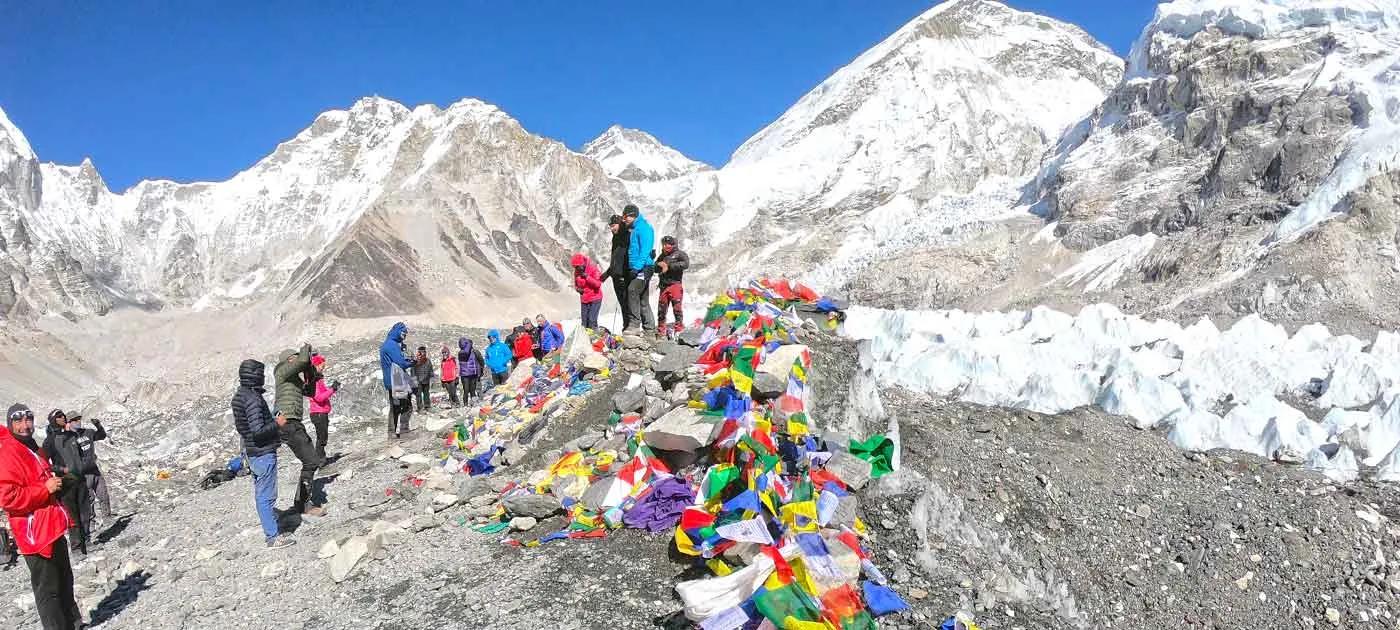
Morning Visit to Everest Base Camp (5,364m): Horses carry you across the rocky glacial trail up to the final boulder zone just shy of the EBC prayer flags, where you dismount and walk the last 20–30 minutes over shifting granite boulders to the Everest Base Camp rock sign for photos.
-
Midday Lunch & Warm Tea at Gorakshep (5,164m): Ride back down to Gorakshep around late morning or midday for hot garlic soup, dal bhat, and warm tea—giving you time to rest without needing an overnight bed.
-
Afternoon Ascent of Kala Patthar (Up to 5,350 m Shoulder or 5,545 m Summit): After lunch, ride up the lower dirt switchbacks of Kala Patthar to the upper horse hitching shoulder (5,350 m)—the exact flat viewpoint where helicopters land. From here, you can either relax and take in the sweeping Everest panorama right at the landing shoulder or walk the final 30–40 minutes up the steep rocky ridge to the summit prayer flags (5,545m).
-
Late Afternoon Return to Lobuche (4,940m): Ride back down past Gorakshep and along the moraine to your warm, attached-bathroom lodge in Lobuche before dark—sleeping 224 meters lower than Gorakshep and 600 meters below Kala Patthar.
Distance, Elevation & Time Breakdown (Lobuche Round-Trip Loop)
Because every meter above 5,000m takes longer than normal, here is what the full Lobuche → EBC → Gorakshep → Kala Patthar → Lobuche loop looks like in distance and realistic hours:
| The Loop |
One Way Distance |
Elevation Change |
Horse + Walk |
On Foot |
| Lobuche (4,940m) to Gorakshep (5,164m) |
4.5 km (2.8 miles) |
+224 m |
1.5 – 2 hours |
2.5 – 3.5 hours |
| Gorakshep (5,164m) to Everest Base Camp (5,364m) |
3.5 km (2.2 miles) |
+200 m |
1 – 1.5 hours (incl. 20–30 min final walk) |
1.5 – 2.5 hours |
| EBC (5,364m) to Gorakshep (Lunch Stop) |
3.5 km (2.2 miles) |
-200 m |
1 hour (plus 1 hr lunch break) |
1.5 – 2 hours |
| Gorakshep (5,164m) to Kala Patthar & Back |
1.8 km each way (3.6 km round trip) |
+186 m (shoulder) / +381 m (summit) |
1.5 hours (to helicopter shoulder) or 2–2.5 hours (incl. 30–40 min summit walk) |
3–4 hours round trip |
| Gorakshep (5,164m) to Lobuche (4,940m) |
4.5 km (2.8 miles) |
-224 m |
1.5 hours |
2 – 2.5 hours |
| Total Same-Day Loop |
19.6 km (12.2 miles) |
8 – 10 hours (incl. lunch & photo stops) |
+610 m to +805 m |
11 – 14+ hours (not recommended in 1 day on foot)
|
Important Ground Realities Before Choosing This Hack
While the Lobuche horse-ride loop solves the Gorakshep overnight problem, keep four honest realities in mind:
-
Where the Horse Stops on Kala Patthar (and Why the View Is Still the Same): Horses do not climb all the way to the very top rocky crest of Kala Patthar (5,545m). Instead, your horseman stops at the flat upper shoulder around 5,350 m—the exact same spot where sightseeing helicopters land. From that point, you have a clear choice: either walk the final 30–40 minutes up the steep boulders to tag the summit prayer flags, or simply enjoy and photograph the view right from the horse drop-off point. Don't worry about missing out on the scenery—climbing the final rocky ridge is purely about standing on the highest point; the wide-open panorama of Mount Everest, Nuptse, Lhotse, Changtse, and the Khumbu Glacier is virtually identical from the helicopter landing shoulder.
-
It Is Not for Everyone: Spending 7 to 8 hours in the saddle over uneven rocky glacial moraine requires decent core balance and warm windproof layers (sitting still on a horse in freezing Khumbu wind feels colder than walking). Similarly, at EBC, horses stop before the final unstable glacier boulder field, leaving a 20–30 minute walk to the Base Camp sign.
-
You Still Need Proper Acclimatization: Riding a horse saves leg fatigue, not altitude physiology. You still must follow a proper acclimatization schedule (such as rest days in Namche Bazaar and Dingboche) before sleeping at Lobuche.
-
Book Your Lobuche Lodge & Horse Ahead: Attached rooms with electric blankets in Lobuche are limited in number, and local horses are in high demand during peak October and April weeks. Reserve your upgraded Lobuche lodge in advance and have your guide arrange your horseman the afternoon before your push day—carrying extra cash in Nepali Rupees for horse hire (see our Everest Base Camp Trek Spending Money Guide for trail cash planning).
Alternative Option: Trek Up, Fly Out by Helicopter
If you prefer walking every step on foot without riding a horse—and still want to skip sleeping at Gorakshep—you can enjoy the comfort of upgraded lodges up to Lobuche, walk to Gorakshep and EBC in the morning, and board a morning helicopter return directly from Gorakshep back to Lukla or Kathmandu (explore how that itinerary works on our Everest Base Camp Trek with Helicopter Return).
Planning Your Everest Base Camp Strategy?
Whether you choose to embrace the rugged charm of a night at Gorakshep, base yourself comfortably in a heated, attached-bathroom room in Lobuche with a local horse ride, or pair your trek with a helicopter return, matching the itinerary to your comfort level makes all the difference above 5,000 meters.
For more practical planning across the Khumbu, check our Nepal Trekking Seasons Guide, review flight and baggage rules in our Kathmandu, Lukla & Pokhara Transit Guide, or message our team if you want help customizing a Lobuche-based EBC itinerary.